
PK Training Worksheet
for Front Row
Product Knowledge Training Worksheet: Load Centers
FAQs
1. Q: What is the difference between a Main Breaker load center, and a Main Lug load center?
A: A Main Breaker load center comes with a factory installed main breaker, and provides over-current protection for the entire load center, as well as a single means of disconnect for the entire house.
A Main Lug load center, also known as a sub-feed load center, comes with no main breaker factory installed.
2. Q: When would a Main Breaker load center be used?
A: Main Breaker load centers are typically used for new construction, replacement of an existing main breaker load center, or where service is being upgraded – for example, from 100A service to 200A service.
3. Q: When would a Main Lug load center be used?
A: Main Lug load centers are typically used as an “add-on” load center to the main breaker load center, when additional circuits are desired and there are no more spaces in the main breaker load center for the additional circuits. It may also be used to distribute power to select circuits, from a more convenient location in the home.
4. Q: Load centers come in different sizes. How do I know which one to use?
A: The size of load center to use is usually a function of the size of the house, and how the electrical load is distributed throughout the house. Generally, the larger the house, the more amps will be needed, and so a larger load center will be needed. Similarly, the more circuits the electrical load in the house is distributed to, a larger load center will be needed.
5. Q. Can load centers be used Indoors & Outdoors?
A: Yes. There are load centers designed specifically for Indoor applications, and load centers designed specifically for Outdoor applications. Be sure to understand where the load center is to be installed to select the correct load center.
List examples of projects that would require this product:
- Main Breaker load centers for new home construction, or service upgrade
- Main lug load centers for add-on’ circuits when space in an existing loadcenter is limited,
or when a more convenient location for certain circuits is desired.
List the top 3 features this product offers:
1. Main Breakers load centers come in several amps and sizes.
2. Main Lug load centers come in several amps and sizes, in both Indoor & Outdoor configurations.
3.
List the benefits the Guest will gain from each feature:
Ensures the guest will find the right load center for their project.
Provides optimal options to select the right load center for their project.
Product Knowledge Training Worksheet: Plug-On-Neutral (PON) Load Centers
FAQs
1. Q: What is a Plug-On-Neutral load center?
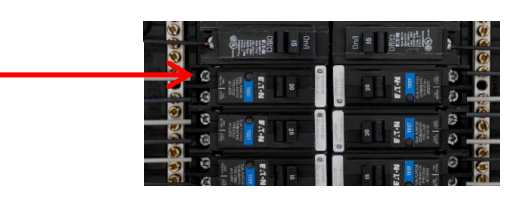
A: A Plug-On-Neutral load center eliminates the need to use “pigtail” electronic breakers. Todays’ code changes are requiring the use of more electronic circuit breakers with “pigtails” in load centers. Use of “pigtail” breakers can lead to clutter in the load center, longer installation time, adds confusion & can be complicated to wire.
2. Q: How does a Plug-On-Neutral Load center work?
A: Eaton’s PON design eliminates the pigtail from our electronic breakers, resulting in reduced clutter in the load center (key benefit to installers), improved safety, ease in installation, reduced installation time and a clean/professional installation on any job.
3 Q: What are some of the key features and benefits of PON?
A: Eliminates pigtail connection providing time & labor savings
B: Professional installation
C: Dedicated inboard neutral
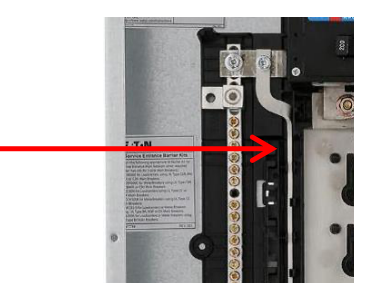
D: Common drive type on ALL screw connections
(breakers, cover screws, neutral/ground terminals)
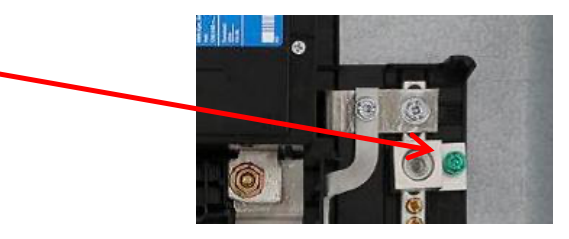
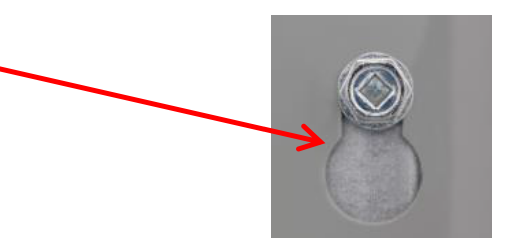
E: Factory installed Grounding Screw – won’t get lost
F: Self-Leveling drywall tabs for quick drywall installations
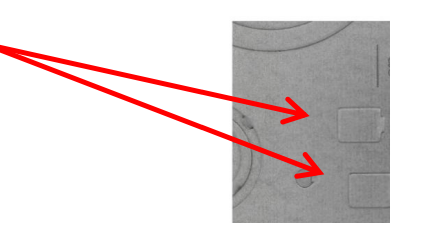
F: Self-Leveling drywall tabs for quick drywall installations
Product Knowledge Training Worksheet: Branch Circuit Breakers
FAQs
1. Q: Several brands are available – which one do I need?
A: Circuit breakers are not interchangeable. They are for use only in the brand(s) of load center listed for their use. A different brand may fit but may not be listed as compatible. Best bet is to match the brand.
2. Q: Do I need a Single Pole breaker, or a Double Pole breaker?
A: Single Pole breakers are typically used for switch, outlet, or lighting circuits. Double Pole breakers are typically used for Air-Conditioner, Water Heater, Clothes Dryer, and Electric Range circuits.
3. Q: How many amps does the circuit breaker need to be?
A: Depending on the current draw, individual circuits will require different amp size breakers.
4. Q: Is there a breaker designed for bathroom circuits, or outdoor circuits?
A: If so, use GFCI circuit breakers.
5. Q: Do I need an Arc-Fault circuit breaker?
A: Check local codes for AFCI use requirements. If required or desired, use AFCI circuit breakers.
List examples of projects that would require this product:
- For use as replacement breaker in an existing load center.
- For ‘add-on’ when any new circuit is being installed using an existing loadcenter.
- For new construction, when a new load center is being installed, and breakers are required for
the new load center.
List the top 3 features this product offers:
1. Circuit breaker trips thermally & magnetically.
2. GFCI Ground-Fault circuit breakers provide people protection.
3. AFCI Arc-Fault circuit breakers provides protection from fires when caused by arcing faults on a circuit.
List the benefits the Guest will gain from each feature:
Provides over-current & short circuit protection for the circuit. Protects the wiring on the circuit, by preventing the wire from over-heating.
Reduces the risk of electrical shock from electrical leaks on a circuit, where electricity may come into contact with water. Has a low 5 milliamp (5/1000th of an amp) trip threshold.
Reduces the risk of electrical fires started by arcing faults on a circuit.
Product Knowledge Training Worksheet: Arc-Fault Circuit Interrupter (AFCI) Circuit Breakers
FAQs
1. Q: What are the AFCI requirements for new construction?
A: As defined by the 2023 NEC, there are several ways to meet this requirement:
- Use a Combination AFCI Circuit Breaker – this provides both parallel & series AFCI protection throughout the entire circuit.
- Use a “Branch” style AFCI Circuit Breaker (commonly required in AFCI circuits prior to the 2008 NEC – “branch” style provides parallel arc protection only), in conjunction with an AFCI receptacle located at the first receptacle outlet of the existing circuit. This method provides Combination AFCI protection throughout the entire circuit.
- Use a standard circuit breaker with an AFCI receptacle located at the first receptacle outlet of a circuit…the wire between the circuit breaker and the AFCI receptacle must be enclosed in metal conduit or armored cable (the circuit must be enclosed in metal), from the loadcenter to the junction box containing the first AFCI receptacle. This method contains an occurring arc between the loadcenter and the first AFCI receptacle. The AFCI receptacle then provides combination AFCI protection for the remaining portion of the circuit.
- Use a standard circuit breaker with an AFCI receptacle located at the first receptacle outlet of a circuit…the wire between the circuit breaker and the AFCI receptacle must be enclosed in a listed metal OR nonmetallic conduit or tubing encased in not less than 2 inches of concrete, for the portion of the circuit between the loadcenter and the junction box containing the first AFCI receptacle. This method contains an occurring arc between the loadcenter and the first AFCI receptacle. The AFCI receptacle then provides combination AFCI protection for the remaining portion of the circuit.
2. Q: What are the AFCI requirements for use in Renovation?
A: As defined by the 2023 NEC, for any AFCI required circuits where branch circuit wiring is
modified, replaced, or extended, the circuit shall be protected by:
- Use of a Combination AFCI Circuit Breaker,
OR - Use a standard circuit breaker with an AFCI receptacle located at the first receptacle
outlet of the existing branch circuit. - NOTE: Any renovation that causes the replacement of an existing loadcenter with a
new loadcenter, shall be considered New Construction, and new construction AFCI
requirements shall be used.
3. Q: What are the requirements for replacing an existing standard receptacle?
A: As defined by the 2023 NEC, AFCI receptacles shall be used when replacements are made at standard outlets, where AFCI protection is required. Exception: Unless the receptacle is protected by an upstream AFCI circuit breaker or receptacle.
4. Q: Is the 2014 NEC followed in all applications?
A: Guests should always check with their local code enforcement body, to understand if all or part of the 2014 NEC code is followed locally. List examples of projects that would require this product:
- For use as replacement breaker, where AFCI protection is required
- For ‘add-on’ when any new circuit is being installed, where
List examples of projects that would require this product:
- For use as replacement breaker, where AFCI protection is required
- For ‘add-on’ when any new circuit is being installed, where AFCI protection is required.
- For new construction, where AFCI protection is required.
List the top 3 features this product offers:
1. Arc-Fault circuit breakers & receptacles provide protection from fires when caused by arcing faults on a circuit.
2. Parallel & Series arc-fault detection and protection for installed wiring AND connected cords & equipment.
3. AFCI breaker provides the additional benefit of thermal & magnetic
overcurrent protection, just like a standard circuit breaker.
List the benefits the Guest will gain from each feature:
Reduces the risk of electrical fires started by arcing faults on a circuit.
Arc-Fault detection on the entire circuit, including wire out to the receptacle or switch, or any cord & equipment plugged into the receptacle
Provides over-current & short circuit protection for the circuit. Protects the wiring on the circuit, by preventing the wire from over-heating.
Product Knowledge Training Worksheet: Air Conditioner Disconnect (ACD)
FAQs
1. Q: What is an Air Conditioning Disconnect?
A: An Air Conditioning Disconnect (ACD) is a disconnect located between the loadcenter and central air conditioner. Its purpose is to provide an installer or repair person with a visible means of disconnecting the power when performing maintenance on the air conditioner. ACD’s are also known as disconnects, pullouts, air conditioner switches.
2. Q: What kind of ACD do I need?
A: Non-Fused 60A Pullout is the most common ACD. But installers should ALWAYS check with their local codes before purchasing and installing an ACD, as many jurisdictions require a different kind of ACD.
3. Q: What kind of ACD’s are available?
A: There are several to choose from:
- 60A Non-Fusible Pullout – This is rated for applications up to 60A, when no fuse is required. It utilizes a non-fusible handle pullout to disconnect power to the AC unit.
- 30A Fusible Pullout – This is rated for 30A applications. It utilizes a fusible handle pullout to disconnect power to the AC unit, and requires the use of two 30A cartridge fuses.
- 60A Fusible Pullout – This is rated for 60A applications. It utilizes a fusible handle pullout to disconnect power to the AC unit, and requires the use of two 60A cartridge fuses.
- 60A Switch Type – This ACD is rated for 60A applications when no fuse or overcurrent protection is required. It utilizes a molded case switch, and turns ON/OFF, similar to a household light switch. It looks like a circuit breaker, but is not a circuit breaker, and provides NO over-current protection.
- 60A Non-Fusible Pullout with 20A GFCI Receptacle – This is rated for applications up to 60A when no fuse is required. It utilizes a non-fusible handle pullout to disconnect power to the AC unit. The NEC requires a duplex receptacle within 25 feet of a central air unit, so repair persons have a means of power to work on the AC unit, and so this unit has a built-in 20A duplex GFCI receptacle with WR/TR. The cover is designed to be “in-use” so when the cover is closed, access to the receptacle is still available.
List examples of projects that would require this product:
New Central Air installations, Central Air replacement, ACD upgrade.
List the top 3 features this product offers:
1. Full range of ACDs.
2. ACD pullouts.
3. ACD with 20A GFCI receptacle.
List the benefits the Guest will gain from each feature:
Ensures the guest will find an approved ACD that will meet the needs of their project.
Allows person to put pullout in their pocket, to ensure power does not accidently come on while being worked on.
Provides access to electrical power for the repair person if needed, and to the homeowner for normal everyday use.
Product Knowledge Training Worksheet: Meter Sockets
FAQs
1. Q: What is a meter socket?
A: A meter socket is used where the electricity enters the home. The electric utility meter (provided by the power company) fits into the meter socket and measures power consumption. When the meter is installed into the meter socket, it allows electricity to flow mfrom the utility (line side) to the home (load side).
2. Q: What size meter socket do I need?
A: That largely depends on the size of the house, and how much anticipated electricity usage there will be. Most residential homes will use either a 100A/125A or 200A meter socket.
3. Q: What kind of meter socket do I need?
A: In almost all circumstances, the electric utility supplying the power, will determine what kind
of meter socket can be used in their service area. The utility company typically will specify the approved meter socket by manufacturer and manufacturers catalog/part number. If no manufacturers catalog/part number is specified, the utility will typically publish a list of
minimum meter socket specifications that must be adhered to. Guest should ALWAYS
check with their electric utility for approval, before purchasing or installing a meter socket.
4. Q: What are common utility specifications and requirements?
A: There can be many, but some of the more common specifications are:
- Overhead or Underground – This is where the utility cable will be coming from, and the meter socket must be made to accept the specified wire feed.
- Bypass – Allows power to continue to flow to the home when the meter is removed. Typically, a “horn” or “lever” type bypass will be specified. 320 amp service usually requires a lever bypass.
- Ring or Ringless Cover – Ringed covers come with an aluminum/tin band that allows the utility to lock the meter/globe in place, by sealing the lock with a utility seal to help prevent tampering. Ringless covers have no aluminum/tin band, and the meter/globe is held in place when the cover is installed.
- Service Disconnect: A service disconnecting means may be required. This is usually a 100 amp or 200 amp breaker installed in the meter socket. This type of equipment is sometimes known as a “meter-main.”
List examples of projects that would require this product:
New home construction, or service upgrade to an existing home.
List the top 3 features this product offers:
1. Meter Sockets come in several amps and sizes.
2. Horn Bypass or Lever Bypass.
3.
List the benefits the Guest will gain from each feature:
Ensures the guest will find a utility approved meter socket they will need for their project.
Ensures that power will flow to the home when the meter/globe is removed.