
Meter Sockets
Description of product:
Meter Sockets
1. Q. What is a meter socket?
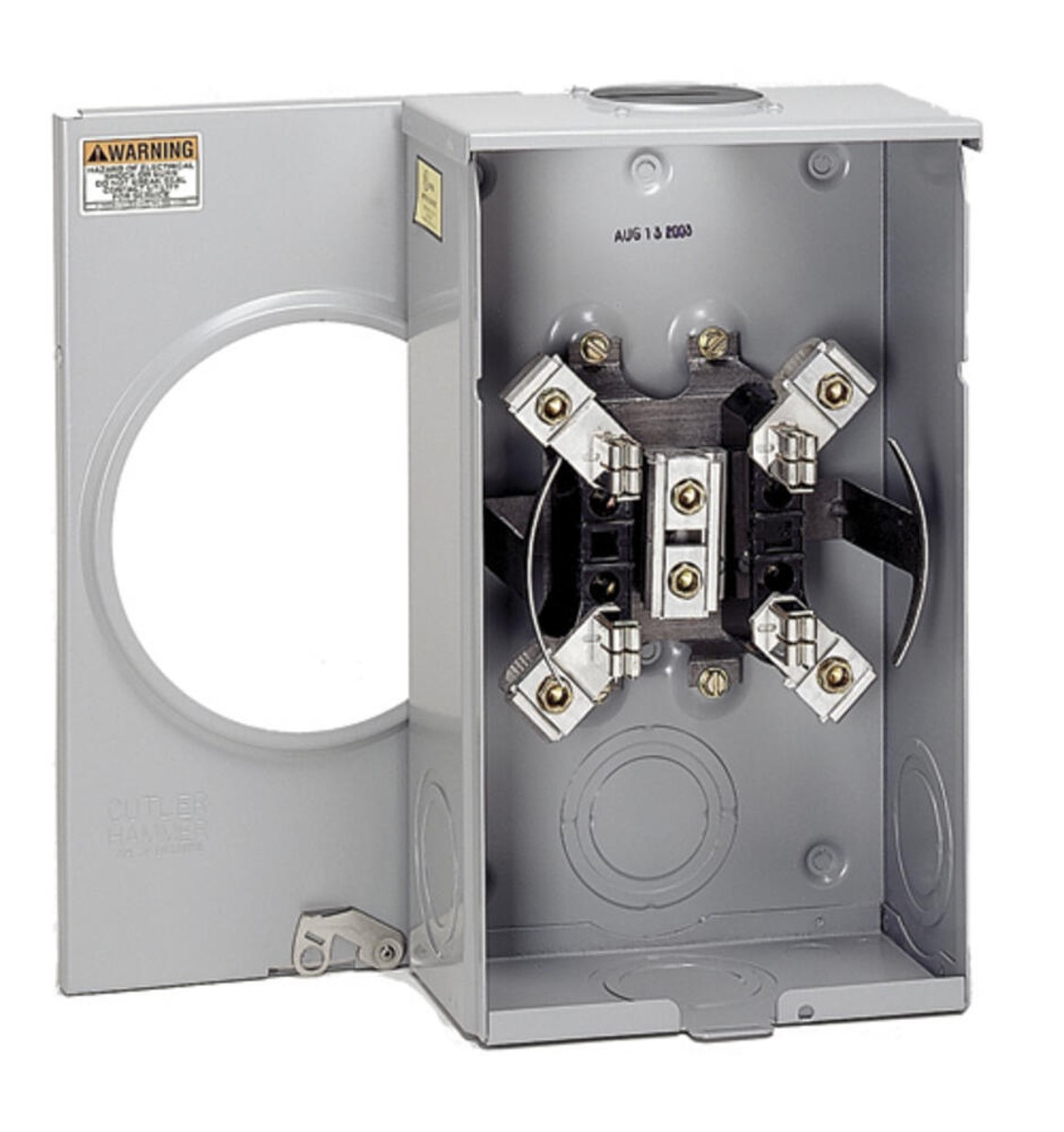
A. meter socket is used where the electricity enters the home. The electric utility meter (provided by the electric utility meter company) fits into the meter socket to measure power consumption. When the meter is installed into the meter socket, this allows electricity to flow from the utility (line side) to the home (load side).
2. Q. What size meter socket do I need?
A. That largely depends on the size of the house, and how much anticipated electricity usage there will be. Most residential homes will use either a 100A/125A or 200A meter socket.
3. Q. What kind of meter socket do I need?
A. In almost all circumstances, the electric utility supplying the power, will determine what kind of meter socket can be used in their service area. The utility company typically will specify the approved meter socket by manufacturer and the manufacturer’s catalog/part number. If no manufacturer’s catalog/part number is specified, the utility will typically publish a list of minimum meter socket specifications that must be adhered to. Guest should ALWAYS check with their electric utility for approval, before purchasing or installing a meter socket.
4. Q. What kind of specifications are typically specified by the utility?
A. There can be many, but some of the more common specifications are:
- Overhead or Underground – This is where the utility cable will be coming from, and the meter socket must be made to accept the specified wire feed.
- Horn Bypass – Each lug on the Line side & the Load side will have a tab on the lugs. The tabs are used for the utility to connect “jumper” wires from the incoming lug connections to the outgoing lug connections, which allows power to continue to flow to the home when the meter is removed.
- Lever Bypass – Allows power to continue to flow to the home when the meter is removed. Instead of using “jumper” cables, there is a lever bypass assembly inside the meter socket that is used. The utility flips the lever inside the meter socket which engages a set of blades connecting power from the incoming side to the outgoing side, allowing power to flow to the home when the meter is removed.
- No Bypass – Means no bypass is required. When the meter/globe is removed from the meter socket, power will not flow into the home.
- Ring or Ringless Cover – Ringed covers come with an aluminum/tin band that allows the utility to lock the meter/globe in place, by sealing the lock with a utility seal to help prevent tampering. Ringless covers have no aluminum/tin band, and the meter/globe is held in place when the cover is installed.
| List the top 3 features this product offers: | List the benefits the Guest will gain from each feature: | |
|---|---|---|
| 1 | Meter Sockets come in several amps and sizes. | Ensures the guest will find a utility approved meter socket they will need for their project. |
| 2 | Horn Bypass or Lever Bypass. | Ensures that power will flow to the home when the meter/globe is removed. |
Meter Sockets Quiz
Quiz Summary
0 of 5 Questions completed
Questions:
Information
You have already completed the quiz before. Hence you can not start it again.
Quiz is loading...
You must sign in or sign up to start the quiz.
You must first complete the following:
Results
Results
0 of 5 Questions answered correctly
Your time:
Time has elapsed
You have reached 0 of 0 point(s), (0)
Earned Point(s): 0 of 0, (0)
0 Essay(s) Pending (Possible Point(s): 0)
Categories
- Not categorized 0%
-
Note: If you scored 75% or higher, you passed! If you scored lower than 75%, just remember you only get 3 attempts total to take the quiz. (E.g. If you took the quiz once, you only get 2 more retakes).
Back to My Account
- 1
- 2
- 3
- 4
- 5
- Current
- Review
- Answered
- Correct
- Incorrect
-
Question 1 of 5
1. Question
What meter socket should be installed?
-
Question 2 of 5
2. Question
When using a horn bypass, how do you maintain power while servicing the meter socket?
-
Question 3 of 5
3. Question
What is the purpose of having a “bypass” meter socket installed?
-
Question 4 of 5
4. Question
What size meter sockets do most homes typically use?
-
Question 5 of 5
5. Question
When using a lever bypass, how is power maintained while servicing the meter socket?